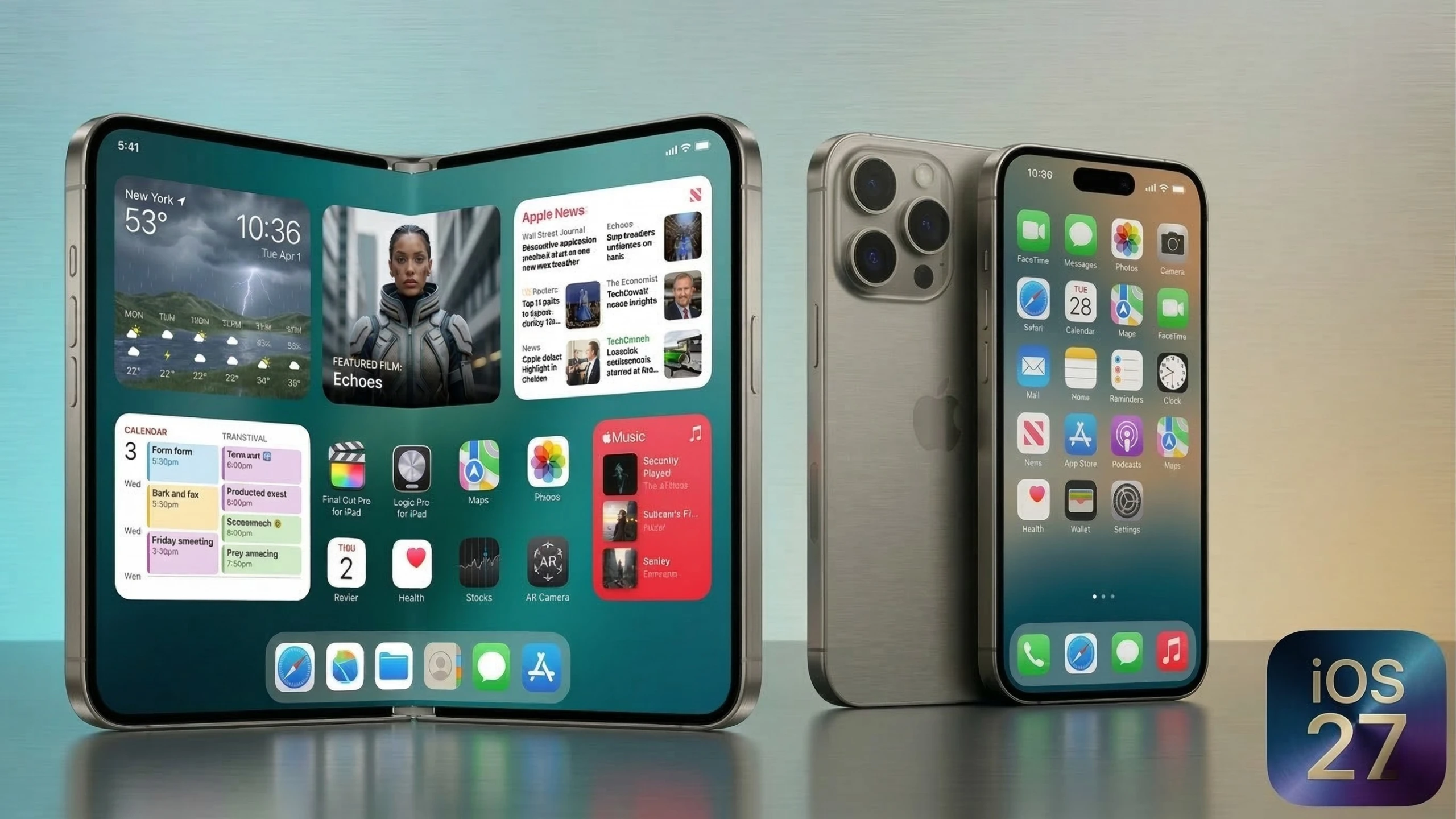
September 2026 is shaping up to be far more than just another hardware refresh cycle; it is poised to be a massive “recalibration” of the mobile tech industry. Industry leaks suggest that Apple is shifting its strategy by holding the standard iPhone 18 for a Spring 2027 release, leaving the fall spotlight entirely to its performance titans: the iPhone 18 Pro, iPhone 18 Pro Max, and the radical device a decade in the making,the iPhone Fold (V68). Yet, the real magic turning these hardware marvels into legends is iOS 27, an operating system that prioritizes “Snow Leopard” levels of stability over flashy gimmicks.
Dimensional Elegance: The 4.5mm Engineering Limit
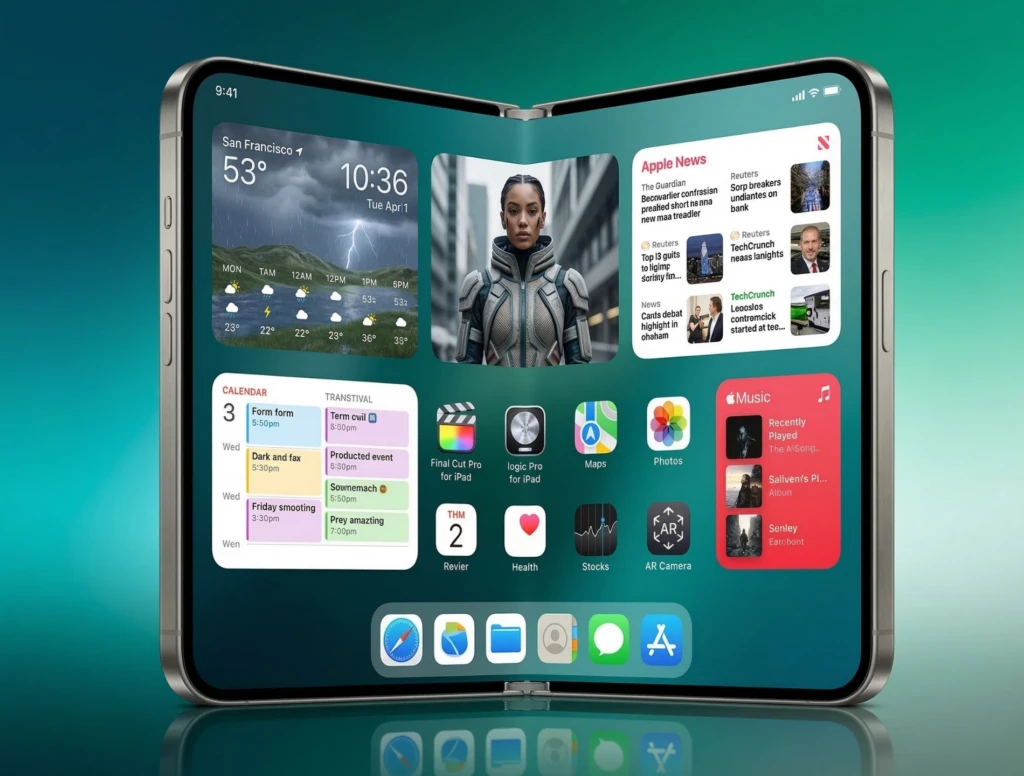
Closed, the device greets you with a compact 5.3 to 5.5-inch outer display—a direct response to the oversized, unwieldy footprint of modern flagships. But the true transformation begins the moment you unfold the stainless steel and liquid metal hinge. The iPhone Fold instantly evolves into a massive 7.8-inch LTPO OLED panel, reaching the dimensions of an iPad Mini. That notorious screen crease? Apple’s engineering has virtually eliminated it. The titanium-alloy chassis drops to a mere 4.5mm when unfolded, aiming for the title of the world’s thinnest foldable. Due to the flexible nature of the display layers, we’re bidding farewell to Face ID in favor of a next-gen Touch ID sensor elegantly integrated into the power button.
Software Meets Hardware: The Return of “Snow Leopard”
No matter how muscular the hardware, the core experience lives and dies by that “purebred,” bloat-free software fluidity. We all know the deep satisfaction of managing windows on a screen without a hint of lag; Apple is doubling down on this with iOS 27. Adopting a “Snow Leopard” philosophy, Apple is focusing on infrastructural debugging and system stability rather than superficial interface tricks. This optimization is vital, as it brings refined iPadOS-level productivity features to the mobile world to handle the iPhone Fold’s expansive real estate.


App Continuity 2.0 and Flex Mode
Apple isn’t just “stretching” mobile apps to fit a larger screen. Instead, iOS 27 delivers a truly responsive architecture. Thanks to “App Continuity 2.0,” an email you start drafting on the 5.5-inch cover screen transitions instantly and seamlessly to the 7.8-inch main display the moment you unfold, with zero loss in resolution or memory state.
The real productivity boom comes via “Smart Split-Screen” and Stage Manager integration. You can run apps side-by-side in a windowed desktop layout on the inner screen and use system-wide drag-and-drop to move files between them instantly. Folding the device 90 degrees activates “Flex Mode,” turning the bottom half into a context-aware virtual keyboard or control panel, effectively transforming your phone into a mini workstation.
Performance Powerhouse and the Purchase Verdict
The heavy lifting for this multitasking load is handled by the A20 Pro chip, backed by 12GB of RAM and a robust 5,500 mAh battery. Apple’s silicon efficiency turns this from a mere “foldable phone” into a genuine professional tool. Naturally, this level of innovation comes with a premium price tag: the iPhone Fold is expected to debut between $2,000 and $2,400, cementing its status as an ultra-premium flagship.
Technology is ready to jump out of our pockets and put on a show on our desks. However, there is one minor casualty in the move to foldables: the drama. Back in the day, you could slam a phone shut to end a heated argument—even risking a cracked screen for the effect. Now, with a $2,400 investment in your hand, you have to fold it gently, with both hands, like the cover of a rare book. Charisma: Absolutely zero.
Editor’s Note: The following technical specifications, pricing, and design details are based on current supply chain leaks and analyst reports. While these insights come from highly credible sources, Apple has not officially confirmed any details. Until Tim Cook takes the stage in September 2026, consider this a deep dive into the industry’s most anticipated expectations.

 Veysel Okatan